MDREV
The MDREV gust detection method is based on the “Velocity increment method” approach, identifying a gust when acceleration exceeds a set limit and ending when it falls below it. Unlike the traditional method, MDREV introduces an additional constraint on window amplitude, in addition to duration, which enables the definition of a more precise acceleration threshold. This means that instead of relying on a fixed 10-minute interval and a 3 m/s threshold, MDREV allows for analyses over intervals of just a few seconds with higher thresholds. These enhancements not only improve accuracy but also make it possible to detect operational gusts—something the original method, focused solely on coherent wind gusts, could not achieve.
Extreme Wind Gusts
A wind gust is defined as a rapid variation in wind speed occurring within a short time interval in a turbulent wind field.
Extreme Operational Gust (EOG)
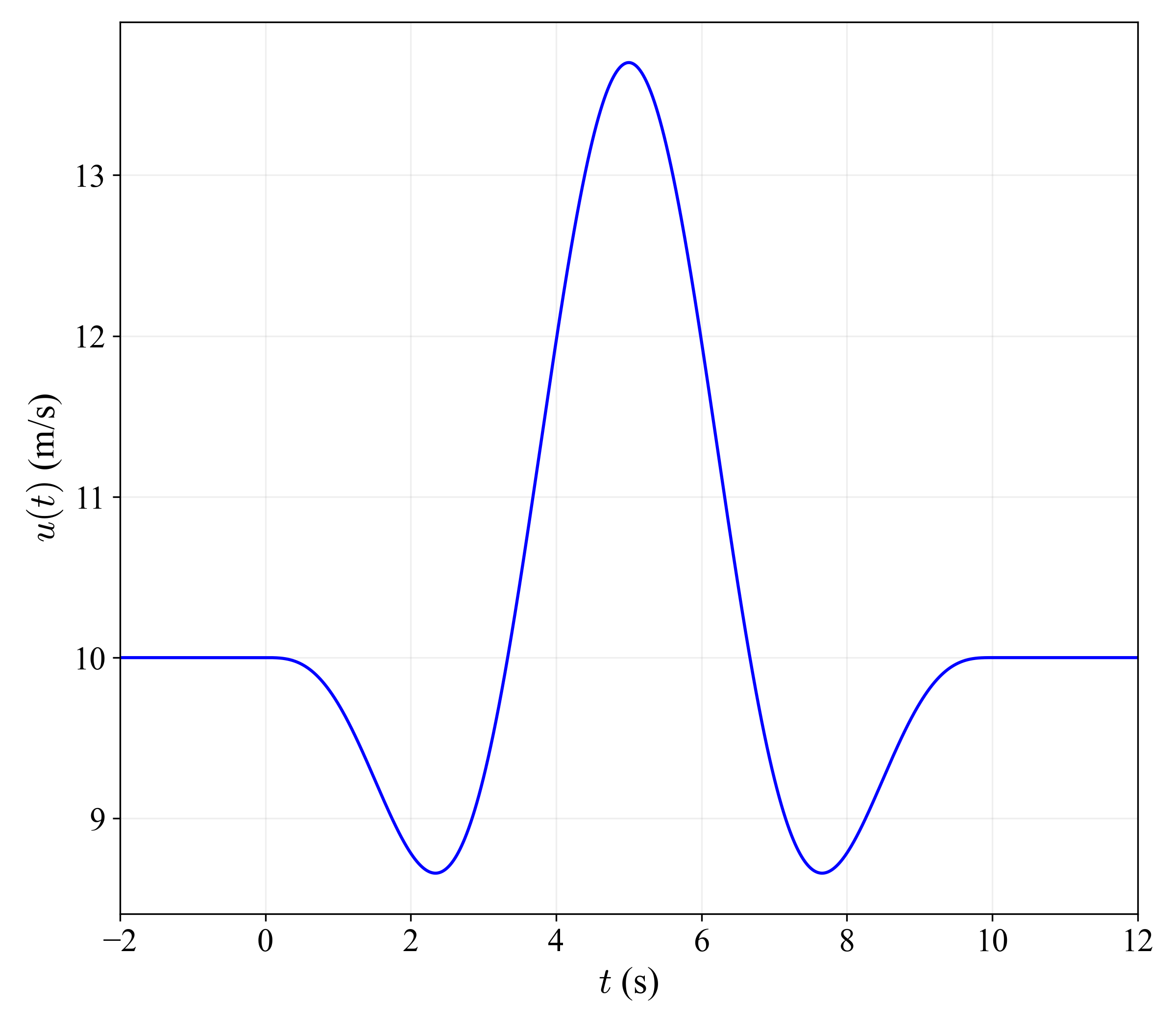
The EOG is defined as a transient event caused by atmospheric turbulence, characterized by a brief drop in wind speed, followed by a sudden increase reaching a maximum value, and then rapidly decreasing back to the original mean speed (see Figure 1).
Extreme Coherent Gust (ECG)
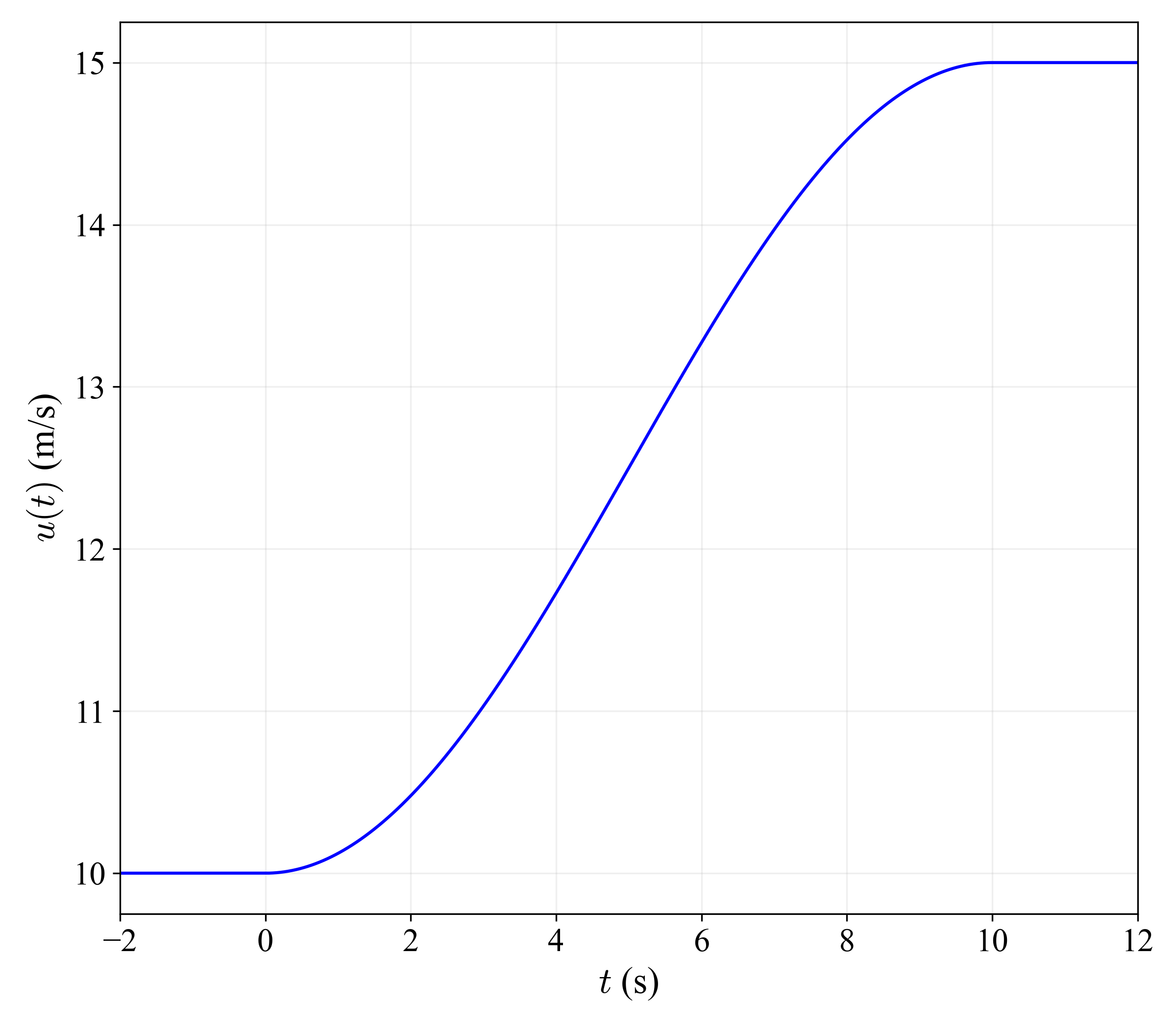
The ECG represents a sustained change in wind speed, typically described by a cosine-shaped curve, which eventually stabilizes at a constant speed. This corresponds to an increase in Ucg compared to the wind speed prior to the gust (see Figure 2).